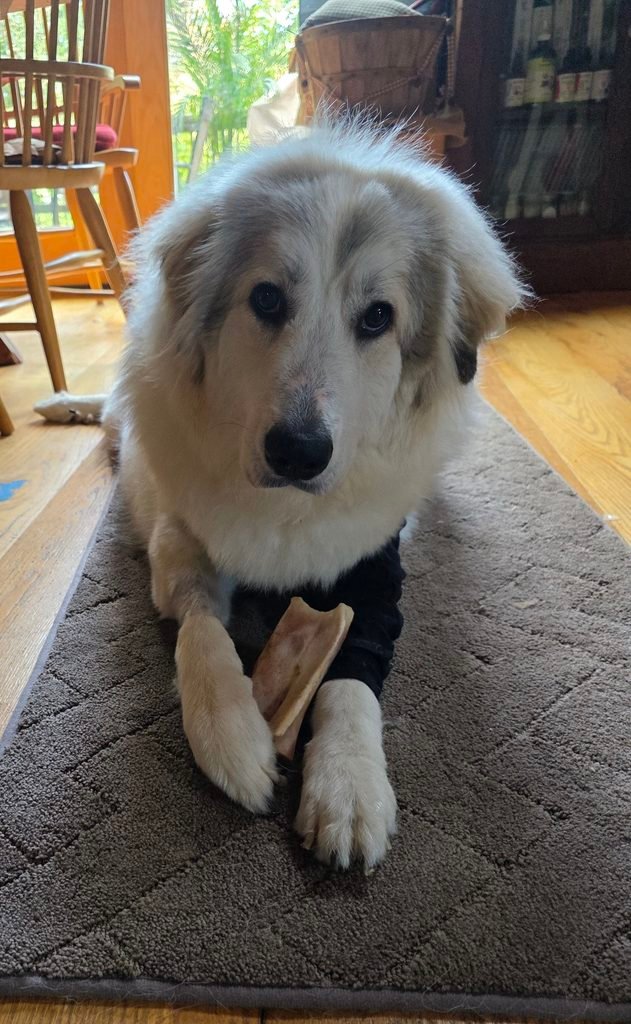
When your dog is diagnosed with Steroid-Responsive Meningitis-Arteriitis (SRMA), the sheer volume of medications can make your head spin. But what nobody prepares you for is the intricate daily puzzle of timing those doses. It isn’t just about making sure your dog swallows a pill; it is about keeping a strict, around-the-clock grid to make sure those pills actually save her life.
Because the high-dose prednisone taper compromises Molly’s immune system, she developed secondary complications—a staph infection on her skin and a bacterial urinary tract infection (UTI) that brought on terrifying blood in her urine.
To fight the SRMA while simultaneously curing her infections and protecting her stomach, our veterinary team put us on a strict rule: An absolute two-hour separation window between key medications.
The Critical 2-Hour Separation Rule
Why is this window so vital?
* Sucralfate (The Shield): This medication acts as a literal band-aid for Molly’s stomach lining, coating it to protect her from severe GI ulcers caused by long-term prednisone use. However, because it coats the stomach so effectively, it will completely block her body from absorbing her antibiotics if given too close together.
* Cefpodoxime (The Antibiotic): This powerful antibiotic fights the rod bacteria in her bladder and the staph on her skin. It needs to be given with food on an uncoated stomach to work at maximum strength.
* Prednisone (The Lifesaver): Her 15 mg steroid taper suppresses the autoimmune attack on her central nervous system, but it must be timed carefully around her meals and stomach shields.
What Our Daily Tracking Looks Like
At 104 pounds, missing a dose or blocking an antibiotic isn’t an option for Molly. We had to build a meticulous daily schedule. For example, if she receives her stomach-protecting Sucralfate to coat her digestive tract, we must wait a full two hours before we can give her the Cefpodoxime antibiotic or her 9:00 PM Prednisone dose.
Here is a visual breakdown of how we structure a typical evening block around her 9:00 PM Prednisone anchor time:
| Time | Medication Type | Main Purpose | Buffer Notes |
| **5:00 PM** | Cefpodoxime (Antibiotic) | Treats staph skin infection & rod bacteria UTI | give with food but no dairy; must wait 2 hours before shields. |
| **7:00 PM** | Sucralfate (Stomach Shield) | Coats stomach lining to prevent steroid ulcers | Must be given 2 hours *after* antibiotics and 2 hours *before* steroids. Give on empty stomach|
| **9:00 PM** | Prednisone (15 mg Steroid) | Calms central nervous system SRMA inflammation | Anchored here to prevent overlap with her morning schedules. Give with food. |
If you are currently setting multiple alarms on your phone or staring at a blank paper trying to map out your dog’s day, here are a few survival tips that kept us sane:
1. Set Hard “Anchor” Times: Lock in your steroid dose time first (like 9:00 PM), and map your 2-hour windows backward and forward from that anchor.
2. Use a Shared Digital Alarm: If you have multiple family members helping with care, use shared phone alarms or a physical, color-coded chart on the fridge so everyone knows if a pill was given or if the 2-hour buffer is still active. Keep a medication journal.
3. Patience with Side Effects: During these windows, the steroids cause intense, unquenchable thirst. Be prepared for constant potty breaks—even late at night right after an antibiotic dose. Be patient when they have accidents, high doses of prednisone can cause them not to be able to hold their bladder, but there is a light at the end of the tunnel, as the dose drops their bladder control will come back.
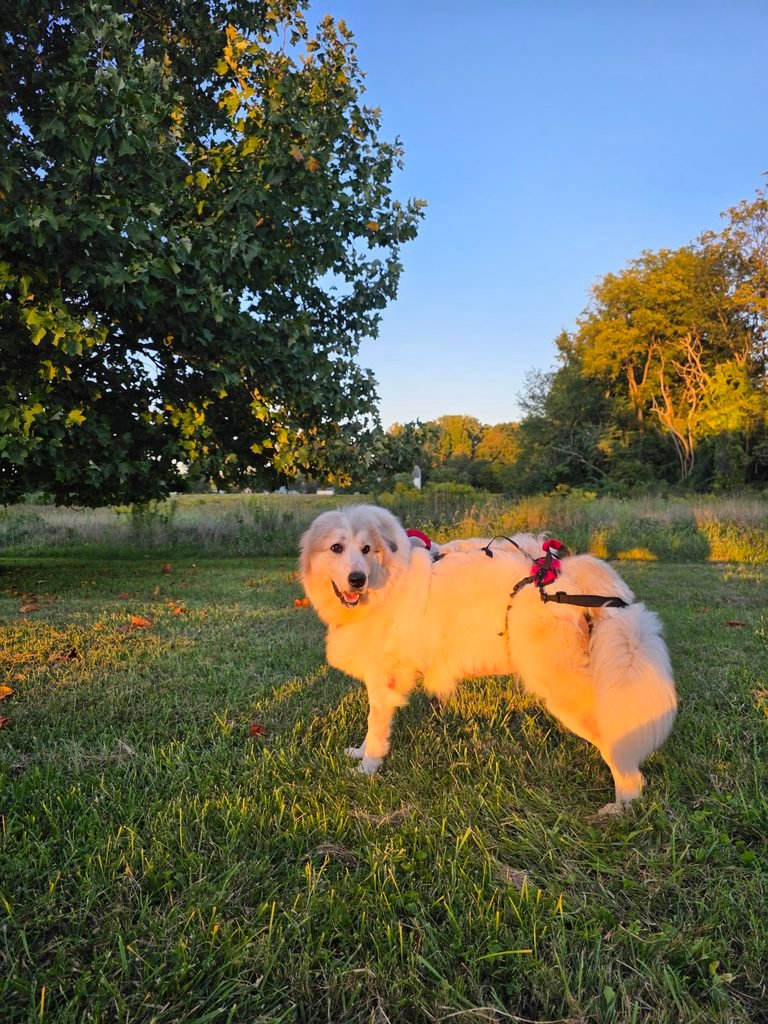
Managing an SRMA medication grid is an exhausting, hyper-vigilant way to live, but watching the strength return to Molly’s back legs makes every single alarm worth it.