When you share your life with a Great Pyrenees, you expect a lot of things- beautiful white fur, fierce loyalty, and a very gentle soul. What you never expect is to watch a thriving goofy silly puppy to collapse on the floor unable to get up in severe pain.
That was the terrifying reality we faced when my baby girl, Molly, became ill. But as devastating as the disease is, the hardest part of our story wasn’t the diagnosis itself. It was the grueling, three-week medical nightmare it took to finally get it.
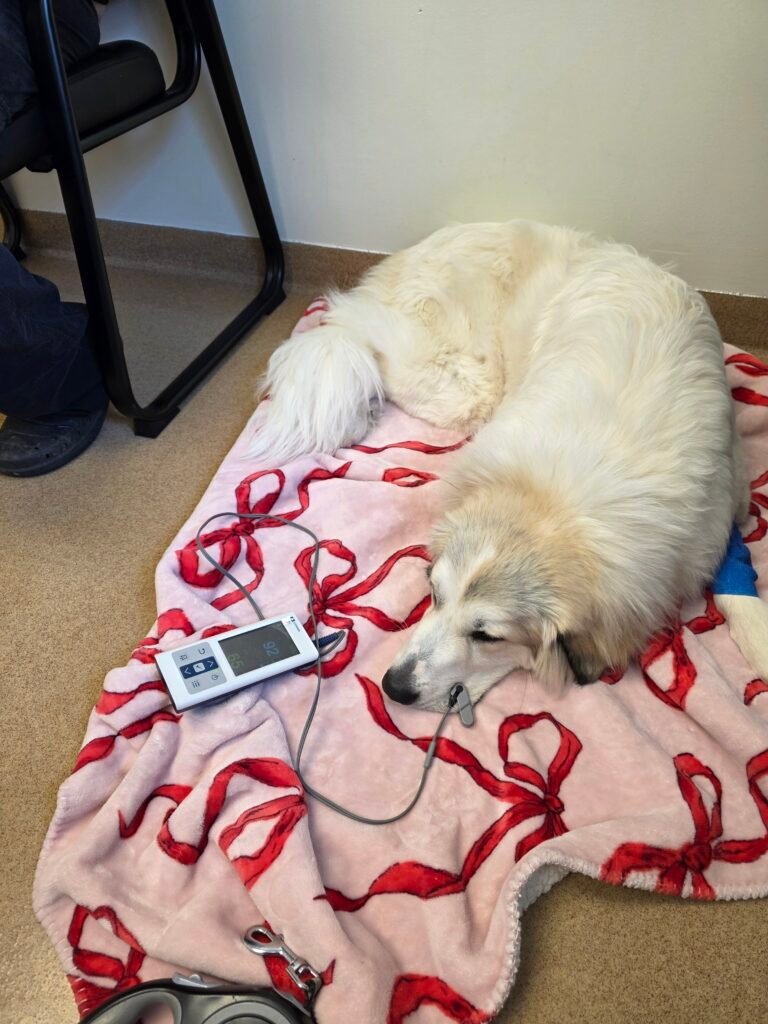
Three Weeks of Blindness and Distant Doctors
For three long weeks, we were passed around and misdiagnosed. We were sent by an emergency room to a specialist a painful hour and a half away. That neurologist was supposed to perform a spinal tap—the definitive test for what was truly happening—but he dismissed it, declaring it wasn’t necessary. Instead, he piled on a mountain of random medications. He had us make several 3 hour round trip visits with a sick dog and charged us a fortune all the time telling us it was impossible that Molly had SRMA. Even tough Molly was sent to him with an IV Cather in so he could perform the Spinal Tap and MRI. Had he did that test Molly would have never collapsed.
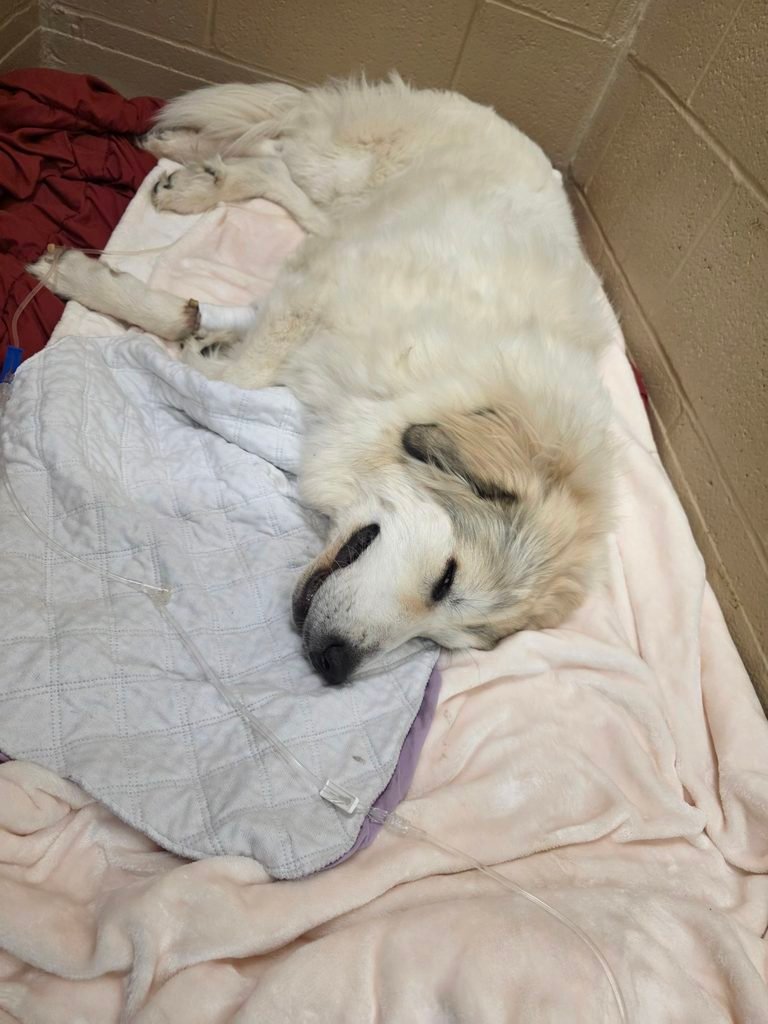
When Molly started violently trembling from the cocktail of drugs, he gave her we rushed her to a local veterinarian closer to home. The vet there was appalled by her treatment and said she should have never been sent to a neurologist. So, instead of digging deeper, that veterinarian took Molly off two of her antibiotics.
Several days later, the consequences of those mistakes hit us like a freight train.
The Collapse
Molly was just 9 months old and weighed 54 pounds when the cost of that delayed diagnosis caught up to us. I was at work when my phone rang. It was my husband. His voice is one I will never forget as he told me I needed to come home immediately—Molly had collapsed, she could not move, and we needed to rush her to the ER.
Lifting your puppy when she has lost all function of her legs is a physical and emotional trauma I wouldn’t wish on my worst enemy. In a blur of tears and adrenaline, we rushed her to a completely different emergency room that had a neurology team.
It was there, looking at our broken, motionless puppy, that we finally got the real answer: Steroid-Responsive Meningitis-Arteriitis (SRMA).
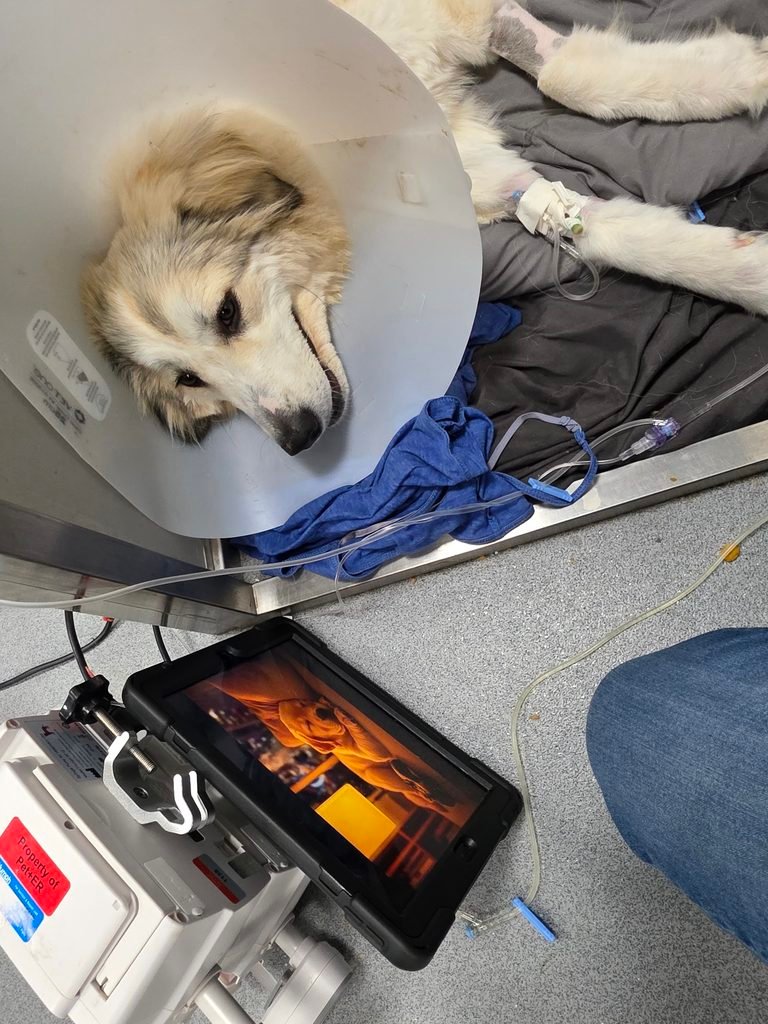
An autoimmune condition had caused severe, agonizing inflammation in the lining of her brain and spinal cord. Because the diagnosis had been delayed for three weeks by doctors who wouldn’t listen, the damage was severe. The ER team looked at us and delivered a crushing blow: Molly might never walk again.
Defying the Odds: Tapers, Complications, and Triumphs
But they didn’t know the resilience of a Great Pyrenees, and they didn’t know how hard we were willing to fight for her.
Molly did defy the odds. She survived, she stood, and she is walking. Today, she is 15 months old and a strong, beautiful 104 pounds. But navigating life after a massive autoimmune crisis is a daily jigsaw puzzle. The high-dose prednisone taper that saves her life also completely suppresses her immune system, opening the door to a whole new set of battles.

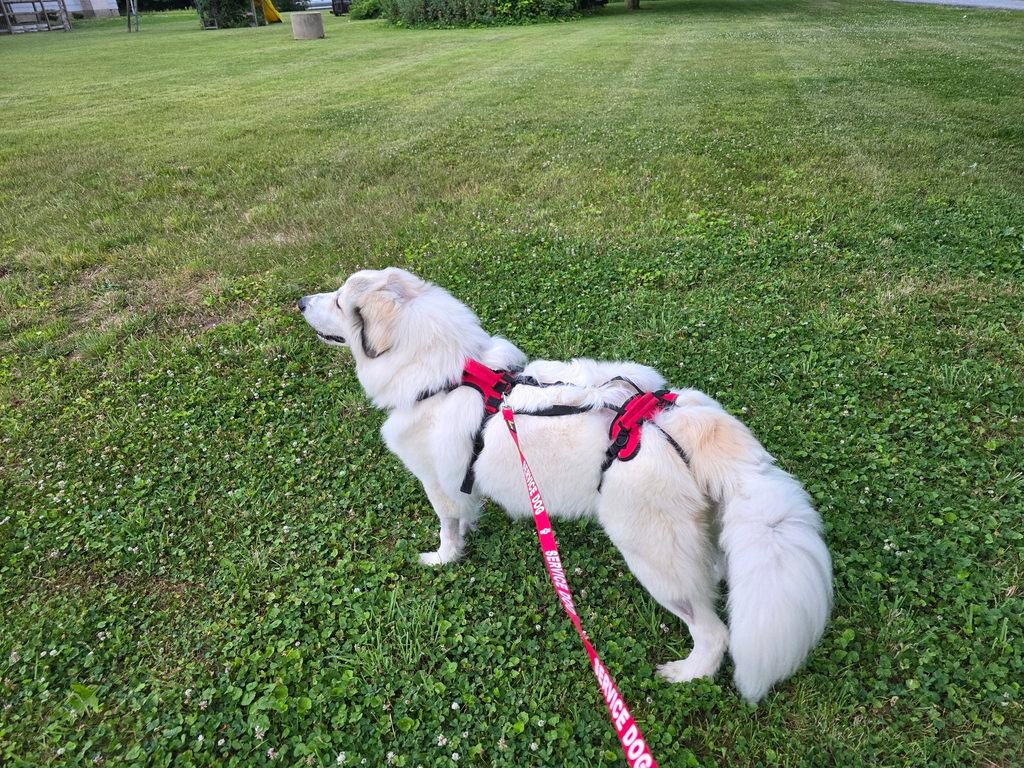
Today, our daily reality isn’t just about a steroid pill. It’s an intensive care routine:
* Fighting Secondary Infections: Managing a flat, red staph skin infection on her hindquarters with specialized Douxo S3 medicated foam and fighting a severe secondary bacterial UTI that caused terrifying blood in her urine.
* The Mobility Battle: Helping her weak back legs off the hardwood floor using a support harness, a network of runner rugs laid across every room, and a handicapped ramp just to get her safely outside.
* The Precise Medication Grid: Keeping a strict, around-the-clock schedule, carefully separating her stomach-protecting Sucralfate from her Cefpodoxime antibiotics and her 15 mg prednisone doses by exact two-hour windows so her body can heal.
Why This Blog Exists
Even in the thick of this chaos, Molly’s spirit is unbroken. She rests peacefully, eats beautifully, and exercises her brilliant mind by solving interactive puzzle games to earn her favorite treats.
I am writing this blog because when you are sitting in an ER waiting room, or driving hours down a highway with a trembling dog, the internet can feel like a very cold, clinical place. I want this site to be a beacon for the owner whose gut tells them the doctor is wrong.
Molly’s journey is complicated, messy, and exhausting—but she is living proof that a devastating diagnosis doesn’t mean it’s the end of the road. You are not alone, and we are here to help you fight.