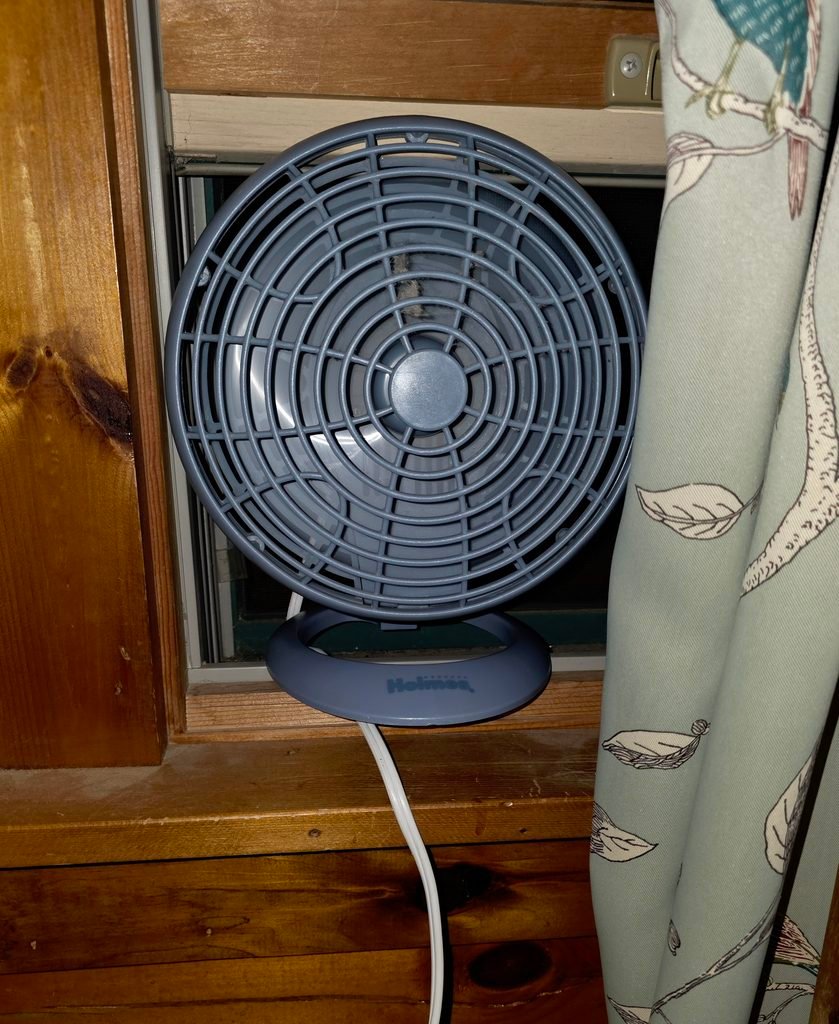
The world changes when the clock strikes 2:00 AM. The house goes completely still, the traffic on the distant road fades away, and the weight of a chronic illness settles into the room like a heavy fog. If you look at my bedroom during these hours, it looks entirely wrong for a chilly autumn night. The window is thrown wide open, the cold night air is pouring across the sill, and two fans are running on high, blasting a freezing breeze directly across the floor.
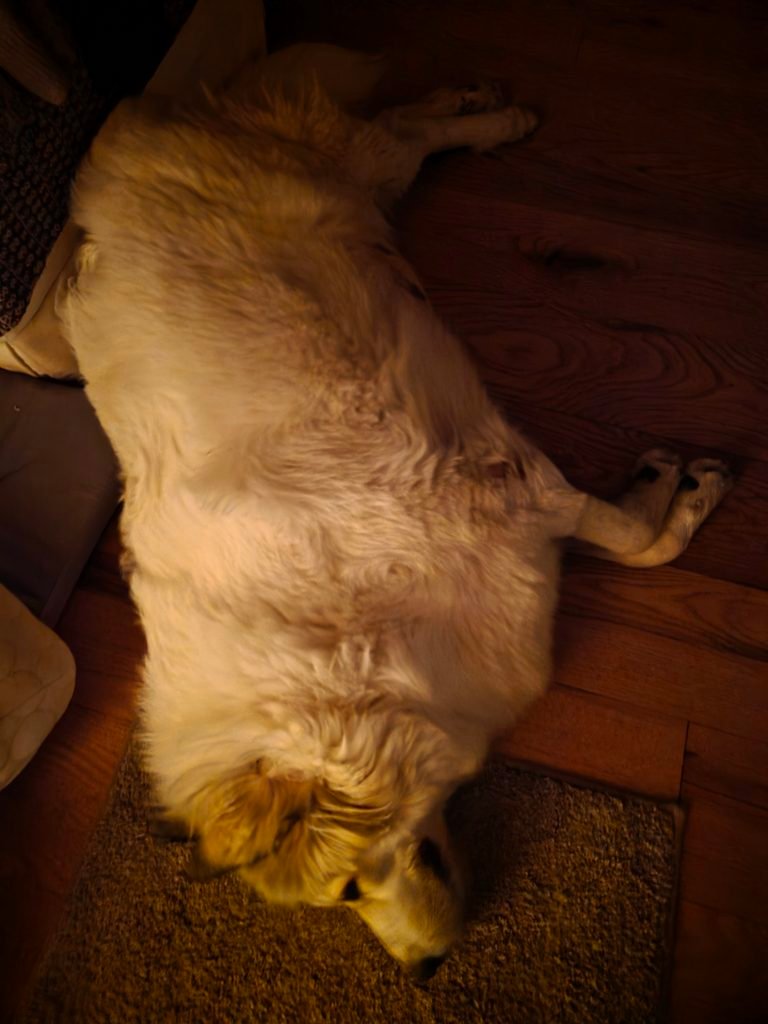
I lie awake under a mountain of blankets, shivering in the dark, watching the rhythmic rise and fall of a massive, white double coat.
I don’t know how many nights I have spent exactly like this—lying awake in the freezing cold, sacrificing my own comfort just to keep our Great Pyrenees, Molly, happy and still.
To anyone looking in from the outside, it probably looks crazy. Why sleep in a refrigerator when you have a perfectly warm house? But to an SRMA caregiver, this freezing room is the only place that matters. Because of the high-dose prednisone taper that suppresses the devastating inflammation in her spinal cord, Molly’s internal thermostat is completely broken. The steroids turn her body into a literal furnace, causing her to pant heavily, pace restlessly on her weak back legs, and look for an escape from the heat.
The only thing that slows her racing breath and stops her from struggling against the slick hardwood floor is the bite of that cold window breeze.
When you are in the thick of treating an autoimmune crisis, everyone asks you about the logistics. They ask about the milligram doses, the exact two-hour medication separation windows, the support harness lift handles, and the non-slip runner rug highways. Those are the tangible things you can track on a whiteboard. But nobody prepares you for the deep, quiet emotional toll of the silent hours.
They don’t tell you about the anxiety that keeps your eyes wide open in the dark, listening to every twitch of her paws, terrified that a sudden movement means a relapse. They don’t tell you about the absolute exhaustion that blurs your vision at work the next day, or the fierce, protective love that makes you willingly freeze under a blanket just so your 104-pound puppy can finally close her eyes and rest without panting.
Caregiving in the dark is a lonely road, but it is also where the truest bond is formed. In those freezing midnight hours, looking down at my hero resting peacefully in the cold breeze, the fear slips away, replaced by an unbreakable resolve.
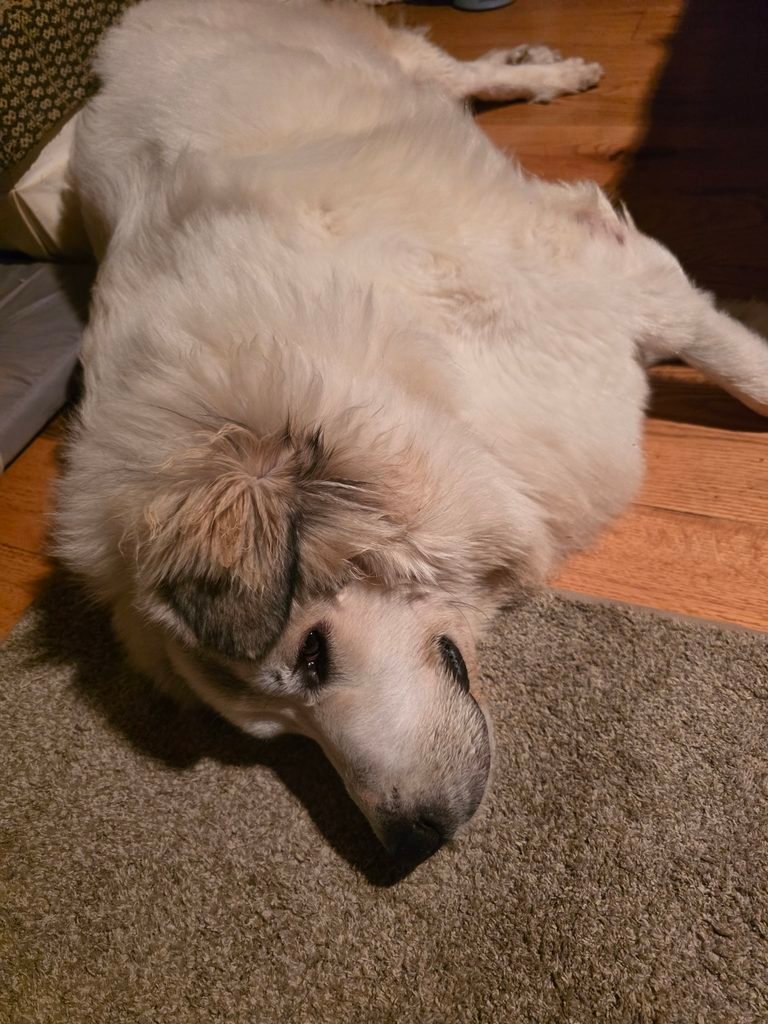
We have carried each other through the misdiagnoses, the sudden collapses, and the secondary infections. And as long as she needs to fight to get stronger, I will gladly sit right here in the cold, keeping the fans running, guarding her sleep until the morning sun finally breaks through the window.