When a dog is recovering from Steroid-Responsive Meningitis-Arteritis (SRMA), the battle isn’t just fighting inflammation—it’s rebuilding strength and trust in their own body.
For a big girl like Molly, our 104-pound Great Pyrenees, hind leg weakness has been one of the hardest hurdles. Even when her spirit is willing and she’s eager to be part of the family, smooth surfaces like hardwood floors and composite decking can feel like an ice rink. When your back legs are already weak from illness and long-term steroid treatment, one sudden slip doesn’t just hurt physically—it shatters a dog’s confidence.
Once a dog associates standing up with falling, they hesitate. They freeze. They start to doubt whether their legs will hold them. That’s where adhesive paw pad protectors come in. Giving a recovering dog lightweight traction directly under their back feet doesn’t just keep them safe; it gives them their independence back.
Why Traction Matters So Much During SRMA Recovery
Dogs carry a lot of their push-off power in their hindquarters. On grass or carpet, their nails and paw pads can dig in to get leverage. On slick indoor floors, their back feet splay outward, forcing weak muscles to work overtime just to stay upright.
While laying down runner rugs everywhere helps create “safe paths” through the house, dogs don’t always stay on the rugs—especially a Great Pyrenees who loves to stretch out on the coolest bare hardwood floor she can find! Having traction right on her back paws bridges the gap when she steps off the rug.
Why We Chose Sticky Paw Pads Over Booties
When you start looking for paw traction, full dog booties are usually the first thing recommended. While booties work great for some dogs, they simply did not work for us—they made Molly’s feet way too hot.
Dogs actually sweat and release body heat through their paw pads. Between her thick Great Pyrenees coat and being on prednisone, Molly overheats easily, and wrapping her paws in fabric and rubber trapped too much heat.
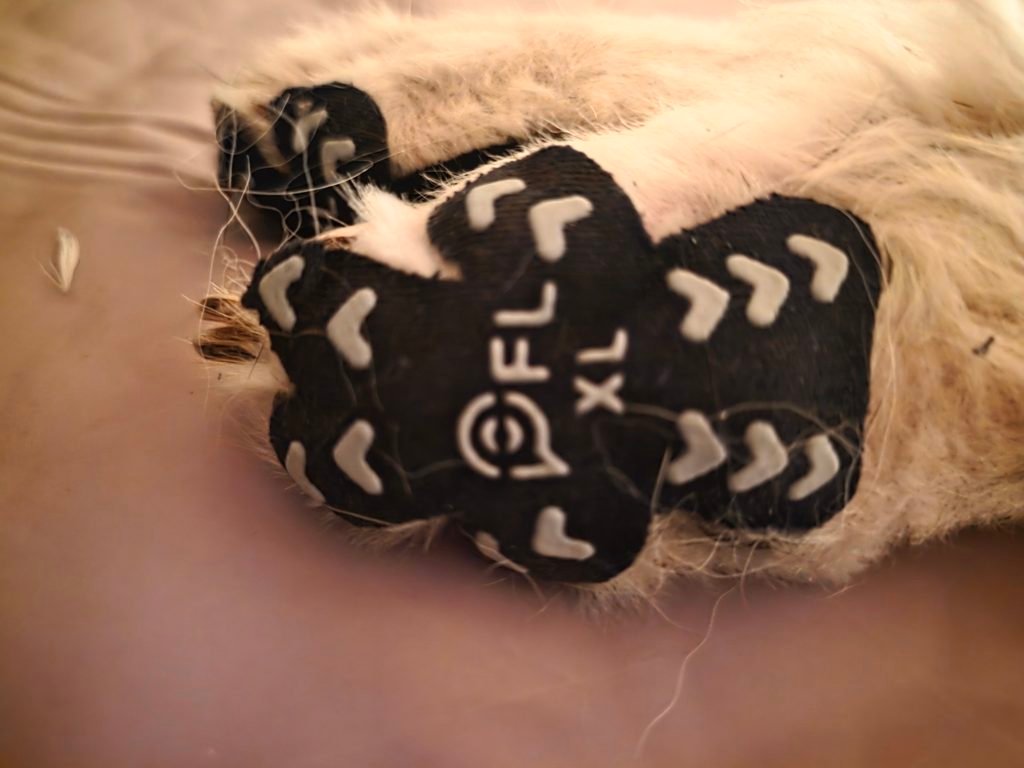
Switching to adhesive paw pad grips on her back feet solved both problems at once:
• No Overheating: Because they only cover the bottom surface of the paw pad, the spaces between her toes stay open so her feet can breathe and release heat naturally.
• Lightweight & Barefoot Feel: There’s no bulky cuff around her ankles or heavy rubber sole weighing down already weak hind legs.
• Targeted Back-Leg Grip: Putting them just on her back paws gives her the exact push-off traction she needs to stand up from the hardwood floor without sliding.
The Honest Trade-Off: Sticky pads aren’t a permanent fix—they don’t last very many days, especially on a 104-pound dog, so you do have to replace them regularly. It’s also important to keep an eye on them as the edges start to loosen so your dog doesn’t peel them off and chew or swallow them. Even with having to swap them out every few days, the comfort and cooling benefits make them our clear winner.
Application Tip: Keep Those Paws Well-Trimmed!
If you decide to try sticky paw pads, keeping the fur around your dog’s paw pads neatly trimmed is an absolute game-changer.
Great Pyrenees have notoriously furry feet, and if that long hair grows over the edges of the pads, the adhesive ends up sticking to fur instead of skin—causing the grips to peel right off within hours. Here is what helps us get the best hold:
• Trim the Paw Fur: Carefully trim the fur flush around the paw pads so the sticker makes full, flat contact with the pad itself.
• Clean & Dry First: Wipe the pads clean of any dirt or moisture and make sure they are completely dry before pressing the grips on firmly.
Watching the Confidence Return
The real magic happens the moment they realize they aren’t sliding anymore. Instead of scrambling in panic to stand up from the hardwood floor, Molly can plant her back feet, push up steadily, and walk across the room with her head held high. That simple layer of grip turns fear back into forward momentum.
Have You Tried Paw Protectors for Your Pup?
Every dog’s SRMA journey looks a little different, and finding the right mobility gear takes trial and error. Have you used sticky paw pads, grip socks, or booties to help your dog with hind leg weakness? Share what worked (or didn’t work!) for your pup in the comments below—your experience might be the exact tip another dog parent needs today!